
Should I Replace My Greenhouse Plastic or Wait Another Year?

Whether to replace your greenhouse plastic this year is, at heart, a question about light: is enough of it still reaching your crop?

One grower recently asked us exactly that:

"Should I replace my greenhouse plastic, or can I wait another year?"

Most growers answer it by eye, by calendar, or by the invoice. A better answer comes from measuring how much plant-usable light your greenhouse actually delivers, and that is what modern greenhouse monitoring makes possible.
Why cover condition is a light question

A greenhouse cover has one main job: let in as much useful sunlight as possible while keeping the climate under control. Over time it does that job less well. Polyethylene film loses transmittance as it ages, because dust and debris scratch and coat the surface and UV exposure yellows the plastic. New single-layer film transmits roughly 85–87% of light and double-layer roughly 74–77%, and the film's life depends on its UV additives: about 1–2 years without them, 3–4 years or more with them.

Condensation adds to the loss. The NSW Department of Primary Industries notes that water droplets on the inside of a cover can reduce light transmission by 8%, and that old coverings can restrict yield.The trouble is that this decline is gradual. Your eyes adapt, and a cover that looks acceptable can still be costing the crop light every sunny day. Photosynthesis runs on light, so less light reaching the canopy means less potential growth, which is why this matters for crop quality and yield, not just for the greenhouse maintenance budget.

How to measure what your cover is really costing you?

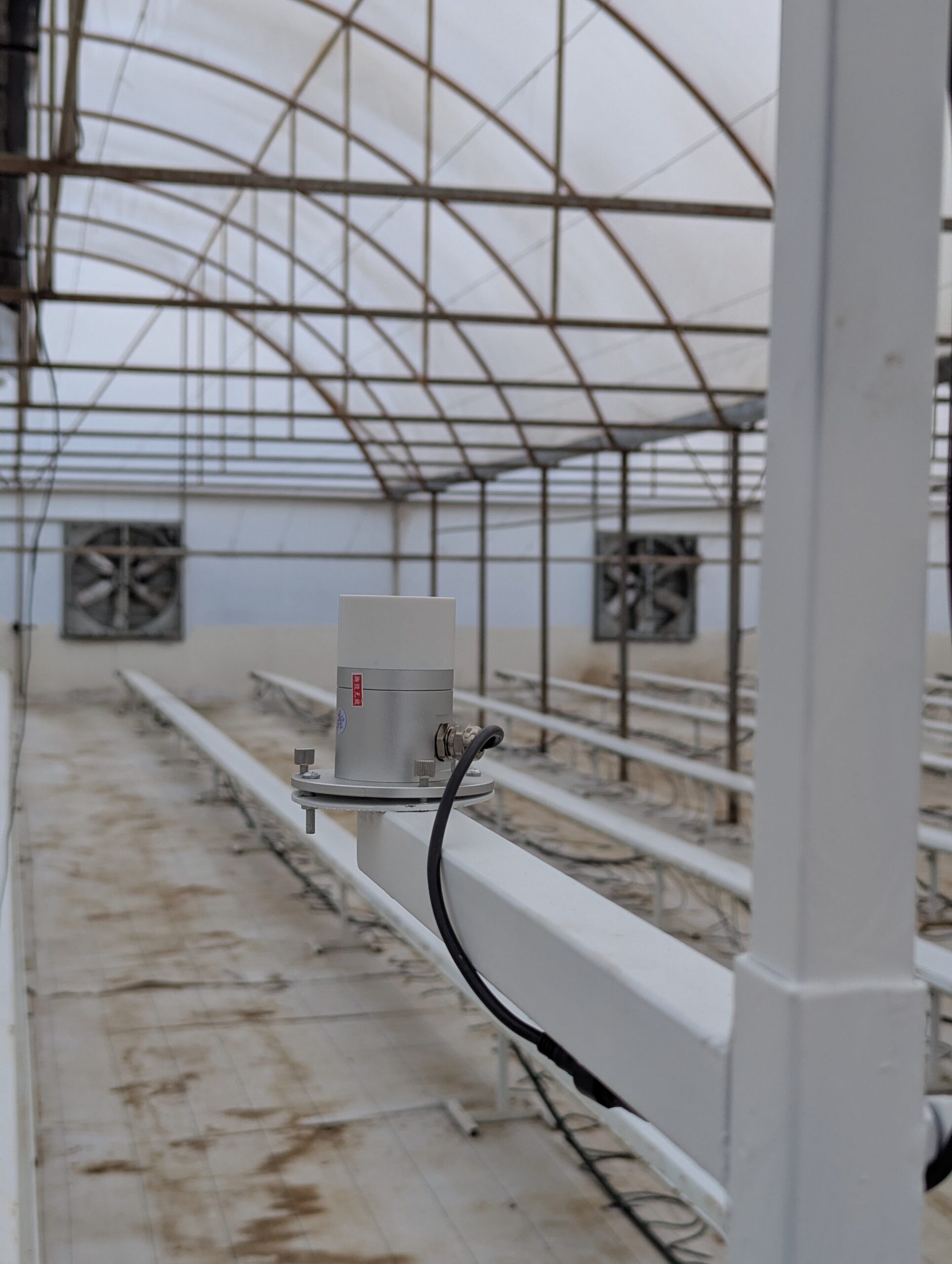
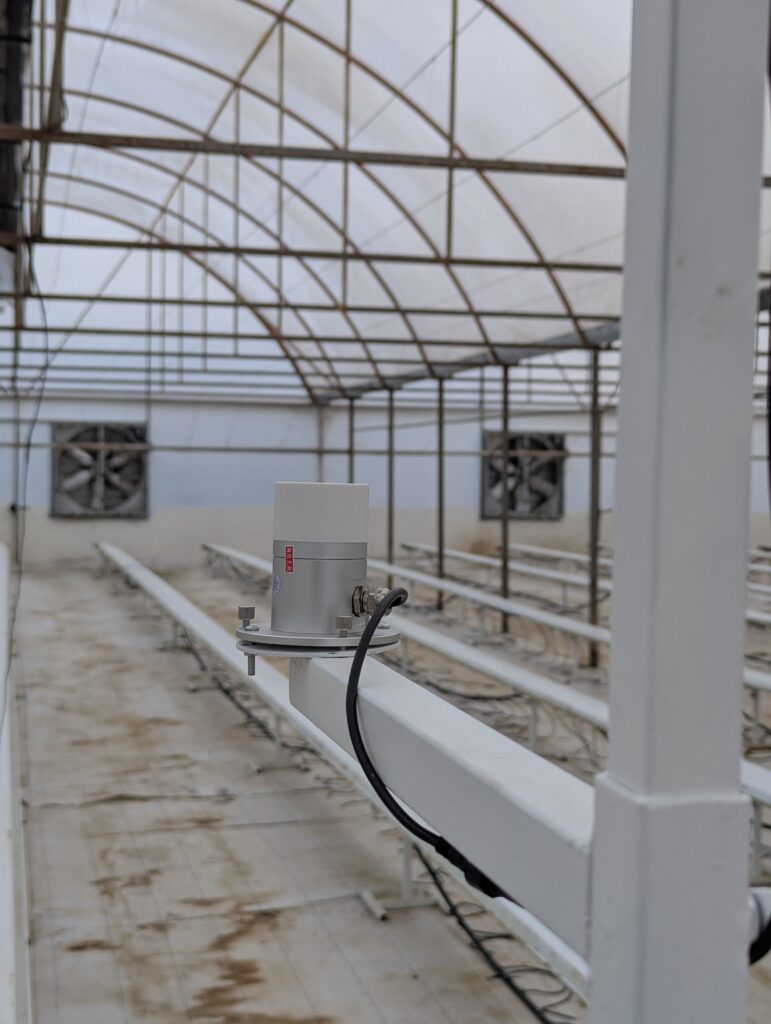
You can turn "it looks old" into a number by comparing two light measurements: the outdoor solar radiation and the plant-usable light (PAR) measured inside the greenhouse by a PAR sensor at crop level. The relationship between the two tells you how much of the available sun survives the trip through your cover.

  • Set a baseline while the cover is clean and in good condition. Record the indoor-to-outdoor light relationship when the film is new or freshly cleaned. This is your reference, and it is the single most important step.

  • Keep measuring continuously. A PAR sensor mounted at crop height, paired with an outdoor solar radiation reading, builds the comparison automatically every day.

  • Compare like with like. PAR and solar radiation use different units, so track the relationship against your own baseline, and compare similar sky conditions such as clear midday hours.

  • Judge it against what the crop needs. The number that matters is not light loss in isolation but whether enough light is reaching your crop, in your greenhouse, at the stage and season it is in.

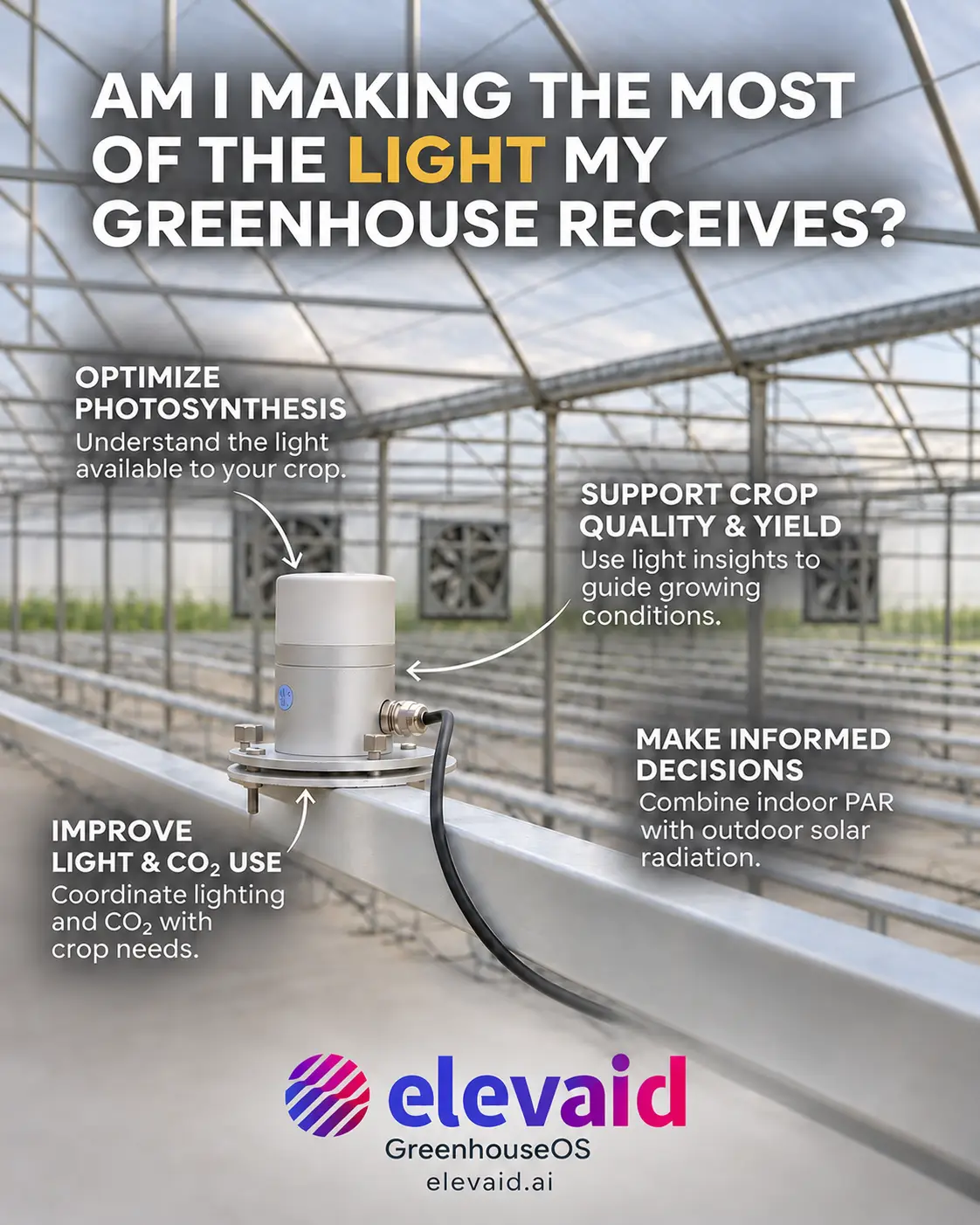
This is the approach behind Elevaid's GreenhouseOS: it tracks whether enough light is reaching the crop according to greenhouse-specific crop needs, rather than leaving growers with a raw curve to interpret.

Reading the numbers: is it the plastic or something else?

A falling indoor-to-outdoor light relationship says less light is getting through. It does not say the film is finished, because several things reduce it, and some are cheap to fix.

Cleaning first is a sound habit. Dirt blocks light, so periodic washing inside and out is the standard recommendation, and washing gives you a clean before-and-after reading that separates a dirty cover from a worn-out one. If the relationship stays well below baseline after cleaning, the plastic itself is the problem.

Replace now or wait another year?

Once you have a baseline and a trend, the decision becomes a comparison between three things: how much light the crop needs, how much it receives, and how fast the gap is growing.

  • Wait when, after cleaning, light reaching the crop is still close to baseline and above what your crop needs in the darkest part of the season, and the film is within its expected life.

  • Re-check soon when the trend is falling but still meets crop needs. Watching the trend monthly shows whether you have one season or three in hand.

  • Replace when cleaning no longer restores the baseline, and light at the crop is dropping below what it needs, particularly going into your lowest-light months.

  • List item

Timing matters as much as the verdict. Replacing film has a cost in labour and downtime, and a cover that fails the crop during the season with least light is costly in lost yield. Light data lets you schedule the replacement before the problem appears, not after the harvest has already suffered.

Waiting is not automatically the cheap option. A cover that quietly removes light every sunny day can cost more in crop quality and yield than the replacement would. For growers weighing capital spending, this is the cost to put against the price of new film, and it is a cost the baseline-and-trend method lets you estimate with your own data, not with guesswork.

From measurement to advice: how GreenhouseOS helps

Useful greenhouse intelligence means turning measurements into clear understanding and practical next steps. That is why we built GreenhouseOS, our greenhouse management software for growers who want more than a dashboard of numbers.

For the cover question, GreenhouseOS combines indoor PAR with outdoor solar radiation, compares it with the baseline from a clean cover, and checks it against the light your specific crop needs. The same light insight supports other daily decisions:

Light, climate and crop are connected, so the best greenhouse environmental control treats them together. More than data, growers need advice they can use to make better decisions every day.

Want to know whether your cover is still giving your crop enough light? Talk to the Elevaid team about GreenhouseOS and a PAR-based baseline for your greenhouse.

Frequently asked questions

How often should greenhouse plastic be replaced?

It depends on the film. Polyethylene without UV additives lasts about 1–2 years, and film with UV additives about 3–4 years or longer (Virginia Tech Extension). Measured light at the crop tells you whether your own film is still performing, whatever its age.

How do I know if my greenhouse cover is blocking too much light?

Compare plant-usable light (PAR) at crop level with outdoor solar radiation, and track the relationship against a baseline taken when the cover was clean. A relationship that stays low after washing points to the cover itself.

What is a PAR sensor, and why use one in a greenhouse?

A PAR sensor measures photosynthetically active radiation, the part of sunlight that plants use for photosynthesis. Placed at crop height, it shows the light your plants actually receive, which air temperature or humidity sensors cannot.

Does the greenhouse cover affect crop yield?

Yes. All coverings reduce light to some extent, and dirty or ageing covers let in less, so old coverings can restrict yield (NSW DPI). How much depends on your crop, season and climate, which is why measuring it for your greenhouse is more useful than a general rule.

Can greenhouse management software help with this?

Yes. Software such as GreenhouseOS turns sensor readings into advice, including whether enough light reaches the crop and when a cover decision is due, alongside climate and COâ‚‚ coordination.

Share the Post:

Related Posts

Interested in GreenhouseOS?

Elevaid is speaking with growers, technology providers and agricultural organisations interested in practical greenhouse digitalisation.